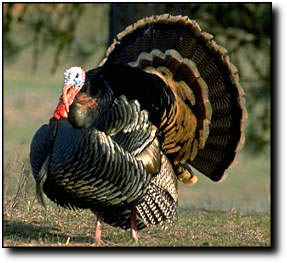
The traditional US Thanksgiving feast is hard upon us and one’s thoughts turn to a roast bird with all the trimmin’s, one might pause to reflect on the turkeys of yore.
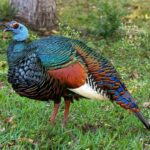
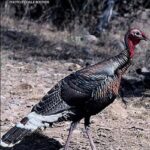
Archaeogenetecists have been hard at work collecting and analyzing the DNA of the remains of several dozen turkeys recovered from archaeological sites throughout Mexico and the US Southwest. The remains have been dated within ranges from 300 BCE to 1500 CE and they showed that several distinct species were raised in different regions of the Americas. These birds included the South Mexican wild turkey, the Rio Grande wild turkey (featured photo), Gould’s wild turkey (left), and the Yucatan’s ocellated turkey (right).
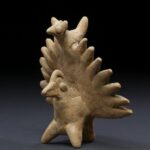
The researchers discovered that although ancient Mesoamerican cultures gradually intensified their turkey-farming techniques and even domesticated some turkeys, they rarely consumed turkeys as food. Instead, archaeologists have more typically recovered turkey remains from ceremonial locations such as temples and human grave sites. The ceremonial connection seemed logical because scientists already knew that turkeys were depicted in Mesoamerican iconography as gods and were symbolized on calendars and in effigies (like the Walters Art Museum’s photo of this turkey-shaped ocarina from Colima, Mexico).
Meanwhile, in New Mexico’s own Mimbres Valley archaeologists like Sean G. Dolan of the Los Alamos National Laboratory and Andrew T. Ozga of Arizona State University found that turkeys were uncommon except at a very few sites. DNA analysis of the remains indicated that almost all of them were wild turkeys. Nevertheless turkeys were depicted on Mimbreño Classic Period black-on-white pottery. The ceramics’ images suggest that turkeys had been handled exclusively by men. (In contrast, where Mimbreño pottery images show humans together with macaws, the human figures are exclusively women. But we digress.)
Further DNA studies revealed that human groups raised both wild and domesticated turkeys concurrently, but with different feeding patterns. The wild turkeys appear to have been kept as free-range birds while the domesticated turkeys were fed diets that were more predominantly based on human crops including corn.
DNA analyses confirmed that modern European turkeys are descended from pre-Columbian Mexican turkeys that conquistadores had shipped to Spain; subsequently the now-European strains of turkeys were imported back across the Atlantic to the eastern U.S.
Food for thought. Happy Thanksgiving.
[turkey photos via: wildturkeyzone.com (left), National Wild Turkey Federation, Huachuca Chapter (center), and jkflies.com (right).]