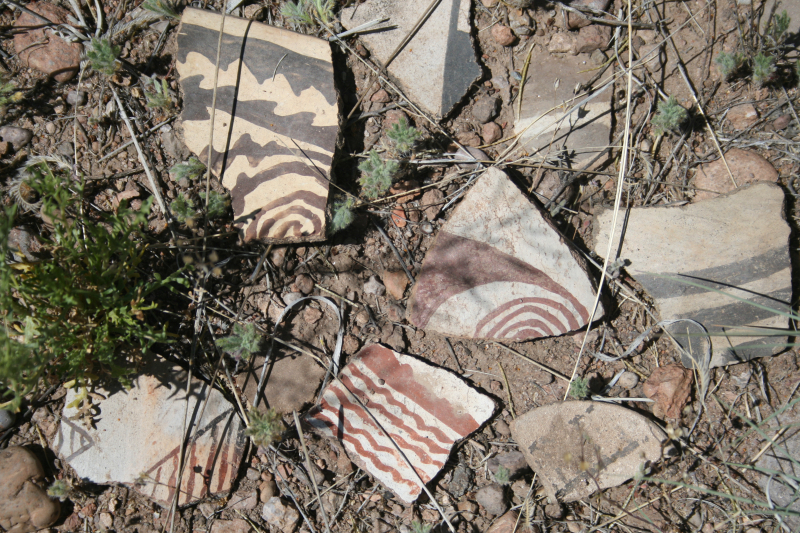
Periodically this here blog addresses the issue of potsherds. We’ve addressed several reasons why today’s avocational archaeologist should leave them wehre they arePeriodically this here blog addresses the issue of potsherds. We’ve addressed several reasons why today’s avocational archaeologist should leave them where they are.
We in the GCAS realize that in past decades it was considered acceptable to gather potsherds by the hatful and bucketful. Many people made a hobby out of collecting as many potsherds as they could carry. Unfortunately the novelty soon wore off so these collections tended to languish, forgotten, in a box somewhere. In our group’s experience the collector’s heirs eventually come across the sherds when clearing out their deceased family member’s belongings. At that point, some sherd collections are no doubt thrown away in a landfill. Or dumped under a convenient tree. Or, sometimes, the heirs find the GCAS and donate them to us.
We at the GCAS tend to prefer that third option. Once separated from the archaeological sites where they were originally picked up, the sherds lose all scientific relevance. They have no monetary value. Nevertheless we would prefer people donate them to a group like ours instead of simply being thrown away. The best-case scenario is that we can use them for educational purposes; for example, to show students samples of various ceramics styles. At the very least the incredible number and size of sherd collections can teach people not to collect them in the first place.
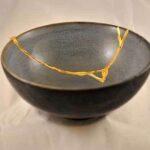
Other cultures approach ceramic sherds differently. Consider the Japanese traditional art of Kintsugi, where broken pottery is repaired with a filler of lacquer infused with powdered gold, silver, or platinum. [Photo via The Book of Life.]
If you ever hear news that the GCAS is holding a fundraising drive to purchase precious metals in powdered form, you will know we’re up to something…#kidding