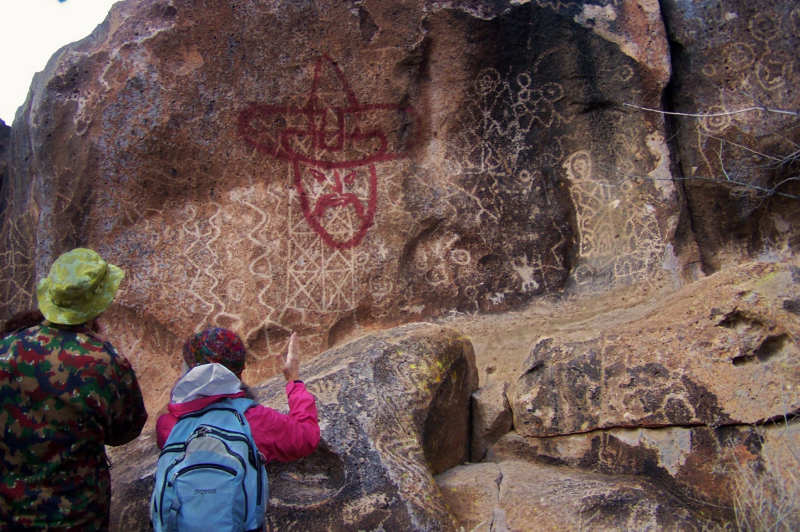
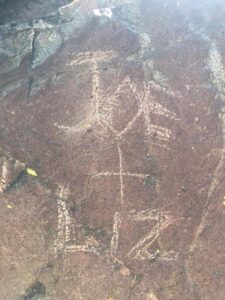
Cool people know how wrong it is to carve (photo, left), spray-paint (featured photo) their own “art” on top of petroglyphs and pictographs, or use ancient rock imagery for target practice (photo, below).That kind of vandalism stifles the voices of the ancient artists and erases their stories. It also creates some very bad juju for the perp. However, even the most well-meaning visitor to an archaeological or historic site may not be aware of the damage that can be caused by other, seemingly harmless activity.
We’ve discussed why it is important to leave potsherds and other artifacts exactly where you find them. The Friends of Cedar Mesa (Utah) agree. The same goes for material like fossils and dinosaur tracks. Remember that if you are on public land, it is illegal to move any such artifacts. Find a bone? Leave it alone. Find an obviously human bone? Do not touch, and immediately notify the ranger or other person in charge of the site.
The Friends of Cedar Mesa have a handy list of these and other tips for a respectful visit to a sensitive area. A favorite among their many handy hints is their suggestion to avoid building fire rings or cairns in or near archaeological sites — because the most attractive stones you would find for your project would very likely be portions of an ancient pueblo’s wall, hearth, or other architectural or cultural feature. The only way to be sure you are not destroying an archaeological feature is to not play with the rocks in the first place.
Enjoy these sites to the fullest by staying on the trails, taking pictures, and keeping your hands to your own self. Marvel at how long these features have lasted, and please help preserve them so that the people who visit after you may enjoy them as they are.